Remodeling in San Antonio
Kitchen, bathroom, and whole-room remodeling in San Antonio: how the scope gets decided, what order the trades go in, and what goes in writing first.
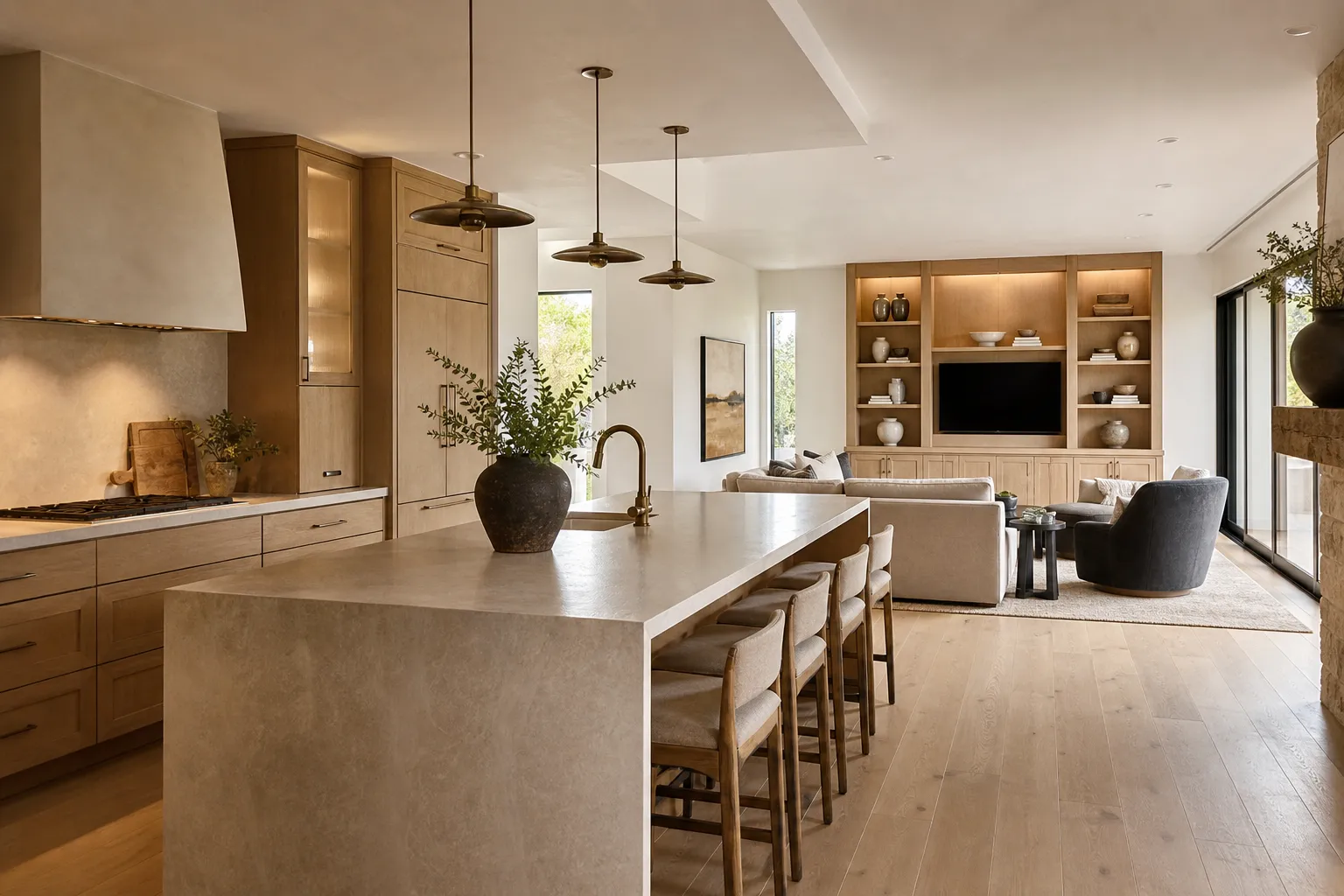
Remodeling is a sequencing problem before it is a design problem. The work is deciding what actually changes, what order the trades go in, and what is written down before anyone opens a wall.
Remodeling projects rarely go wrong at the finish. They go wrong earlier, at the point where somebody assumed something: that the wall was not carrying anything, that the plumbing ran where it appeared to run, that the tile could go down Thursday because the drywall would obviously be finished Wednesday.
So the conversation worth having at the start is not about colors. It is about what is behind the finishes, what has to happen in what order, and what you want to be true when it is done.
The remodeling work we take on
- Kitchens. Work that changes how the room functions rather than only how it looks: the layout, the run of the counters, where the appliances land, and everything behind the cabinets that has to move when they do.
- Bathrooms. The room where the most is hidden behind the least. Waterproofing, substrate, and ventilation decide how a bathroom ages, and none of them are visible once the work is finished.
- Rooms and living space. Opening up, closing in, or reworking a room that does not do what the household needs it to do.
- Making good after water damage. Where a leak has been dealt with and the ceiling, the wall, and the floor it traveled through still have to be put back.
What we do not do is quote a remodel from a photograph. What a room needs is decided by looking at the room.
How the scope gets decided
- We look at the room and at what it connects to. A kitchen is not only a kitchen. It is plumbing, electrical, ventilation, a floor that continues into the next room, and sometimes a wall that is holding the roof up.
- We tell you what is uncertain. Some things cannot be known until a wall or a floor is open. We would rather name those up front than discover them in front of you later.
- You get the scope in writing. What is being done, to which rooms, in what order. In writing, so you can read it properly, ask about it, or take it to someone else for a second opinion.
- Permits get settled before the work. If one applies to your job, you hear it before anything starts rather than after. Requirements depend on the jurisdiction the property actually sits in, which is not always the one the mailing address suggests.
When something turns up
On a remodel, something usually does. A previous repair done badly, a pipe where no pipe should be, a subfloor that has been quietly wet for years.
You hear about it at the point we find it, with what it means for the scope and the schedule. Not on the invoice at the end. That is the whole difference between a surprise and a change you agreed to.
The trades a remodel pulls in
A remodel is almost never one trade, which is why the sequence matters more than any single piece of it:
- Drywall, once anything has been opened, moved, or replaced.
- Painting, which is the last thing to happen and the first thing anyone notices.
- Flooring, which has to be timed against everything that could damage it.
- Roofing, when the reason for the remodel came from above.
- Home additions, when the room you want is not there yet.
- General contracting, which is the part that holds the rest of it together.
Talk about the project
Call (210) 802-9577 or send a message describing the room and what you want to be different about it. If you are not sure whether it is one job or three, that is a good question to start with.